
“Summer days, drifting away”
Got to love a Grease quote. Those summer days are well and truly drifting away now. It’s been six or so crazy weeks since we were in a normal routine, juggling time with the children, keeping work ticking over, and hopefully catching some sun along the way. Children or no children, summer always brings that interesting stretch where lots of us are away, our clients and customers are away, and the whole pace of things shifts. Now that September’s here and the children are back at school or in childcare, do you feel raring to go, or slightly manic about the whole day stretching out in front of you? If you remember one thing from this post, it’s this: don’t rush straight in to try and do all the things.
Take a moment before you dive back into back to work after summer break mode
Before you open the laptop and start working through the list, stop. Have a little mini-holiday moment and think about some of the good things that happened over the summer. Make a drink and spend five or ten minutes enjoying the quiet. A bit of distance might have given you a new perspective on your work, or on what you actually want the next few months to look like. Is there something you’d like to change? Has an idea been quietly forming in the background? Write your thoughts down while your mind is fresh and then come back to them in a few days to think about what needs to happen next.
After a hectic few months in a different routine, your brain might be in a bit of a funk. That’s fine. Be kind to yourself and ease back in gently. The small, calm habits are often what bring you back to yourself when everything feels a bit scattered.
Take your time getting back to work after summer
There’s plenty of advice out there about getting going after a holiday — get up early, hit the ground running, get on top of things fast. I’d gently push back on that. Yes, a bit of planning helps. But why burn through all the good, relaxed energy you might have built up over the summer? The point of rest is to actually rest, and if you come back at full sprint before you’ve properly landed, you’ll run out of steam before October.
Take your time. Look through your lists and notes and have a gentle review of where things are and what actually needs to happen. If you’re feeling really stuck, go back to what you care about: why you do this work, who it’s for, what you were building before the summer arrived and shuffled everything around. That reconnection can be surprisingly useful when you can’t quite find your feet.
A note on rhythm
Getting back into a working rhythm after a long break isn’t really about discipline. It’s about finding a loose structure that makes it easier to show up each day without having to make every decision from scratch. If you’ve been using Time Buckets to organise your week, September is a good moment to revisit your rhythm. Things will have shifted over the summer: kids’ schedules, your energy, which projects are live. Your July rhythm probably needs a September version. And if you don’t have a rhythm system yet, a natural reset point like this is a good time to build one, not because you need a colour-coded schedule, but because a loose structure means you stop losing hours to the question of what to do next.
Get your thoughts out of your head
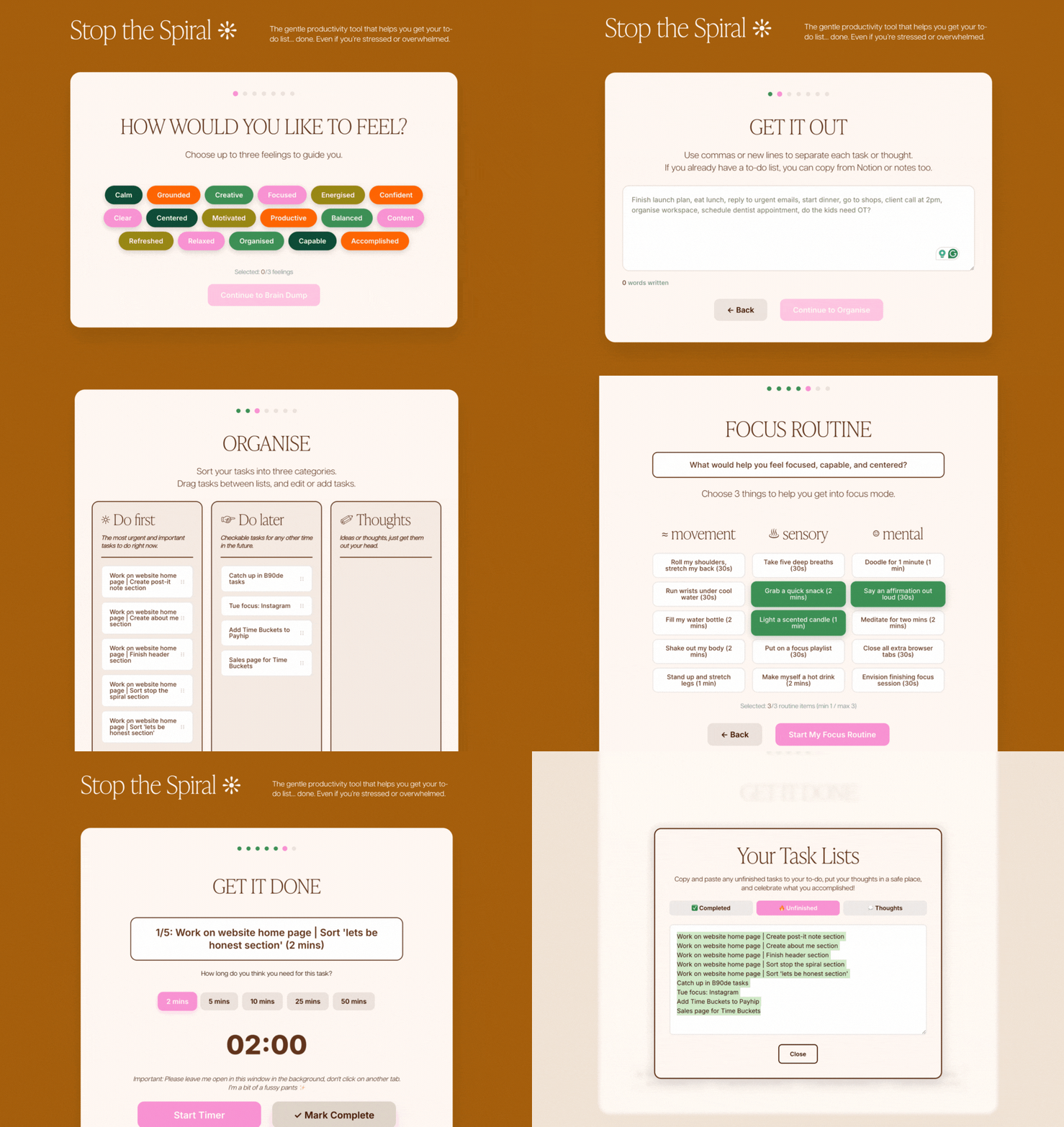
It’s hard to get going when you’ve got a million things racing round your head. So before you try to plan anything, get everything out first. Ideas, worries, half-finished tasks, things you keep meaning to do, write them all down in one long list, or record them on your phone and type them up as you listen back (my favourite method). The point is just to empty the swirl out of your head and onto a page.
Once it’s all out, don’t leave it as one long overwhelming list. Sort it into categories. A “do now” list, a “future” list, and an “ideas” list is a good place to start. Sorting it is what turns a brain dump into something you can actually work from. Without that step, the dump just sits there feeling like more weight rather than less.
Maintain and grow
Another way to sort your list is to split it into two columns: what you need to do to maintain things (urgent, time-sensitive, can’t really wait) and what you want to do to grow things (important, but not on fire). Maintain comes first. You cover more ground from a steady start than from a running-on-empty one. Simplifying what you’re actually working on each day is one of the quickest ways to get your momentum back.
You can’t squeeze six weeks into one day
Keep your to-do list manageable, especially in the first week. Six weeks of things have been quietly accumulating, and it’s tempting to try to tackle all of it at once. That way usually leads to seventeen open tabs, a lot of task-switching, and very little actually finished by the end of the day.
What helps more is working out what actually needs your attention versus what just feels urgent because it’s been sitting there a while. Those aren’t always the same thing. Prioritise accordingly, and accept that week one back is a re-entry week, not a catch-up-on-everything week. Week two will be more productive for it.
Celebrate the small wins and don’t forget yourself
Still got a little post-summer glow? Hold onto it. When you get to the end of your first week back, take a moment to notice what went well, not just what’s still on the list. Made a new connection? Got through the week without forgetting a single thing for the kids? Sent the email you’d been putting off since June? All of it counts. We don’t need to wait for someone else to notice. The celebration can be small (a proper cup of tea, a walk, a five-minute nap if you can swing it) but noticing the wins is what helps you keep your groove rather than constantly measuring yourself against everything that’s not done yet.
And if the first week back brings a spiral of overwhelm rather than a gentle return to rhythm, Stop the Spiral is a free tool that helps you work out what’s actually taking up the most space in your head so you can start from there, rather than from the whole pile at once.
Use your people
Feeling a bit lost or flat as you come back to work after summer? You’re not alone in that, and there are people around you who will be feeling exactly the same. Whether it’s someone in your professional network, a friend who gets it, or a community of women working through similar things, use them. Sometimes the most useful thing isn’t a new system or a better list, it’s knowing that someone else is also standing in the field wondering which direction to walk in, and that eventually you both figure it out.
September is a reset, not a relaunch. Ease back in, sort through what’s waiting, find your rhythm again. That’s enough.
If you’d like a bit of structure to help you get there, Time Buckets is my flexible rhythm system for working out how to organise your week in a way that actually fits your life. Not a rigid schedule, just a way of knowing roughly when you’re doing what, so you’re not starting every day from scratch.
Don’t do more. Do what matters. Do it differently.