Why Work Life Balance Feels So Hard
If you’re running a business from your kitchen table while the kids argue in the next room, or you’re squeezing work into the margins of a very full life, this one’s for you.
You’ve probably Googled some version of this. Maybe at 11pm, answering emails in bed, wondering why it all feels so impossible despite the fact that you’re clearly trying very hard.
Here’s the thing nobody says plainly: the version of work life balance we’ve been sold isn’t realistic for most of us. Two neat halves of your day, never bleeding into each other, a clean line between work-you and home-you. It sounds lovely. It’s mostly fiction.
And chasing it is part of what’s making us feel like we’re failing.
So let’s talk about what actually works instead.
The myth of perfect separation
The traditional advice is to keep work and life completely separate. Dedicated hours, a proper office, a clear end to the day. For some people, in some seasons, that works fine.
But if you’re a parent, neurodivergent, self-employed, or carrying a disproportionate share of the home load, a clean split often just isn’t possible. The school run lands in the middle of your morning. The dentist appointment can’t be scheduled around your client calls. Your brain doesn’t clock off just because your laptop does.
Trying to force total separation when your life doesn’t allow it isn’t discipline. It’s just a faster route to burnout.
And honestly? The reason so many of us can’t make traditional productivity advice work isn’t a personal failing. A lot of that advice was built for a very specific kind of life. One where someone else handles the school run and the dentist and the mental load of keeping everyone fed and clothed and where they need to be. That life is not our life.
So we can stop blaming ourselves for not fitting a system that was never designed for us.
Why letting it all blur doesn’t work either
On the other side, if work and life merge completely, everything starts to bleed into one never-ending pile of stress and half-finished things.
You find yourself answering emails while making pasta. Brainstorming content while folding laundry. Feeling guilty every time you try to rest because technically you could be working. That’s not integration, that’s just overwhelm with a nicer name.
The Sweet Spot: Integrated Enough, Separated Enough
Here’s the reframe that actually helped me:
Work and life balance best when they’re integrated enough to support each other, and separated enough to sustain each other.
Not perfect halves. Not a rigid split. A thoughtful blend that has some shape to it.
What healthy integration actually looks like
Integration isn’t chaos. Done well, your planning systems work across both home and business. One brain dump, not five separate lists on three different apps and a Post-it stuck to the kettle. Prepping dinner early creates space for an evening work session without resentment. The invisible load (the mental weight of running a home and a business at the same time) gets accounted for, rather than just squeezed into the margins.
If you want to go deeper on this, this post on making life feel calmer is a good place to start.
What healthy separation actually looks like
Separation is less about building walls between your roles and more about creating enough protection that you can actually breathe. Being able to log off without the guilt spiral. Having time that belongs just to you, not your clients, not your kids, not your inbox. Choosing when you’re available, rather than being permanently on, so your work has a shape to the day instead of expanding to fill every available minute.
We deserve that. And if boundaries are something you’re working on, this post on life and business boundaries is worth a read.
How to Actually Balance Work and Family Life
Build rhythms, not just schedules
A schedule tells you what to do. A rhythm tells you how to move through your day, and there’s a real difference between the two.
“Work 9 to 12” is a schedule. “Mornings are for focused work, afternoons are slower, evenings belong to the family” is a rhythm. One breaks the moment something goes wrong. The other bends.
Start by noticing your natural energy patterns. When do you do your best thinking? When do you hit a wall? When do you need to switch modes? Build your day around those instead of forcing yourself into someone else’s ideal structure.
On days when the energy between you and the kids just isn’t flowing, these small energy-shifting ideas can help you reset without derailing the whole day.
Make the invisible load visible
One of the biggest reasons work life balance feels impossible is that half the workload is invisible. The mental load of managing a home, tracking everyone’s appointments, remembering to order more toothpaste. It’s work, even when nobody counts it as such.
Writing it down, putting it in a system, sharing it where possible. That’s the first step to making it manageable. You can’t organise what you can’t see.
If you’re looking for a simple system to hold all of it in one place, these Notion board ideas are worth a look.
Give your working day some shape
One thing that makes an immediate difference is simplifying how you structure your work time. Not more detail, less. Three clear priorities, not a list of twenty.
If you want a quick place to start, these three steps for simplifying your working day are practical and genuinely doable in a limited window of time.
Give your time some shape with Time Buckets
Rather than a rigid hour-by-hour schedule, Time Buckets give your day a flexible structure. Broad blocks of time with a clear purpose that flex around real life without falling apart completely.
So instead of “9am emails, 10am client work,” you have “morning: focused work, midday: life admin and transitions, afternoon: lighter tasks and family.” The shape holds even when the details shift. It’s the system I use myself, and the one I come back to every time things start to feel like too much.
Get the Time Buckets Method here
Work Life Balance Tips That Actually Stick
If you want somewhere practical to start, these are the moves that make the biggest difference:
Audit your time honestly. Where is it actually going? Not where you think it’s going.
Name your non-negotiables. What are the things that, if they happen, make the day feel okay? Protect those first.
Account for the load, not just the tasks. Your planning should include the mental load, the transitions, the energy it takes to switch between roles. If it’s not in the plan, it doesn’t get done and you wonder why you’re exhausted.
Build in genuine off time, not “I’ll rest when this is done.” Scheduled, protected, guilt-free. It counts as part of the plan.
You Don’t Need Perfect Balance. You Need a Better Rhythm.
There’s no perfectly balanced life where work and home never collide, and we can stop waiting for it.
What we’re actually after is a life with enough shape to feel manageable, enough flexibility to handle what actually happens, and enough breathing room that we’re not permanently running on empty.
You can’t systemise your way out of an impossible load. But you can build rhythms that mean you’re not spending your limited energy on the wrong things. And that matters.
If you want to start with one tool, make it Time Buckets. A simple, flexible system for giving your day some shape without locking yourself into a rigid schedule that falls apart by 9:15am.
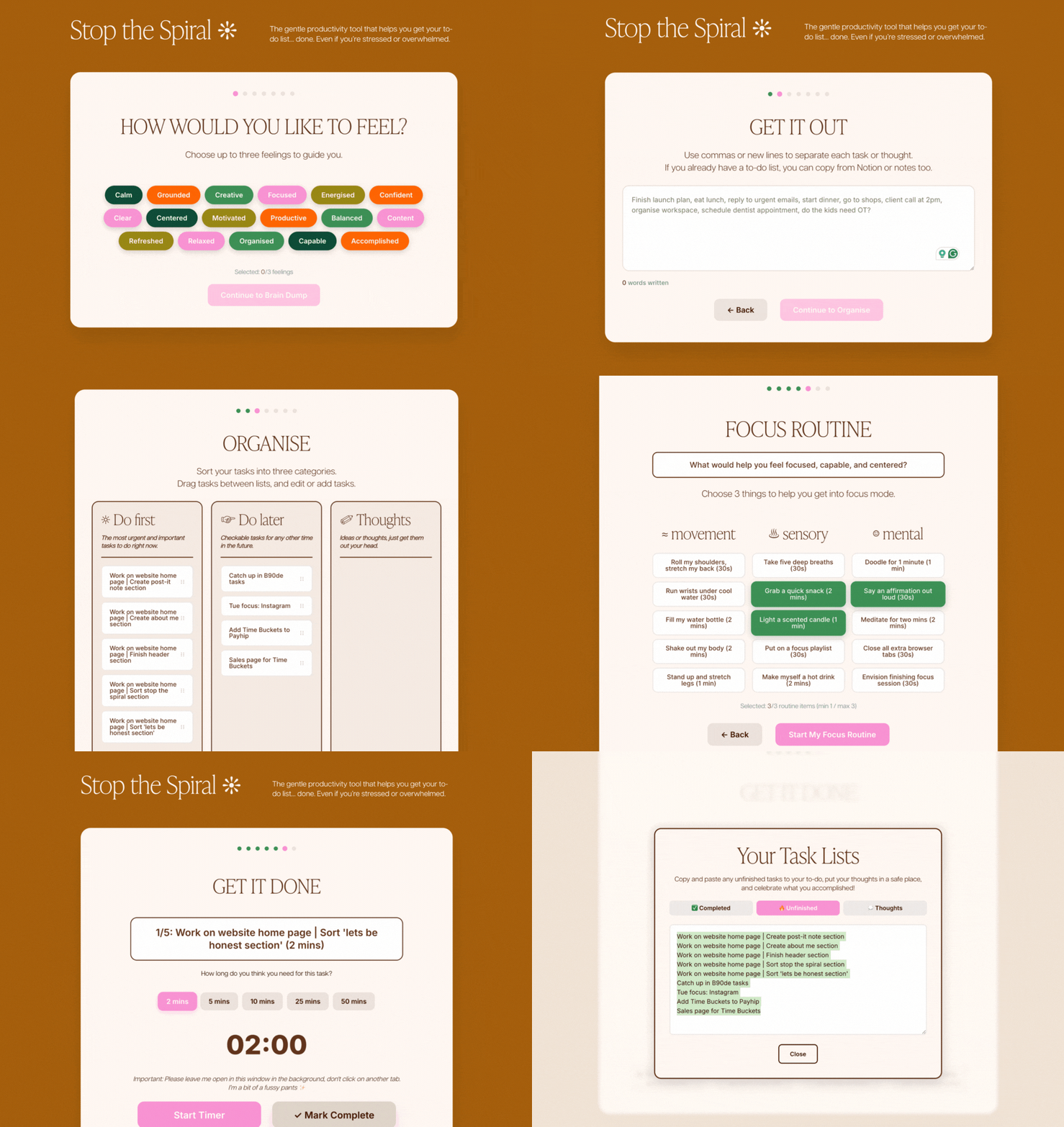
And if overwhelm hits before you get there, Stop the Spiral is free and takes about five minutes.
Don’t do more. Do what matters. Do it differently.